Rimac
Loading…
Loading…
Rimac
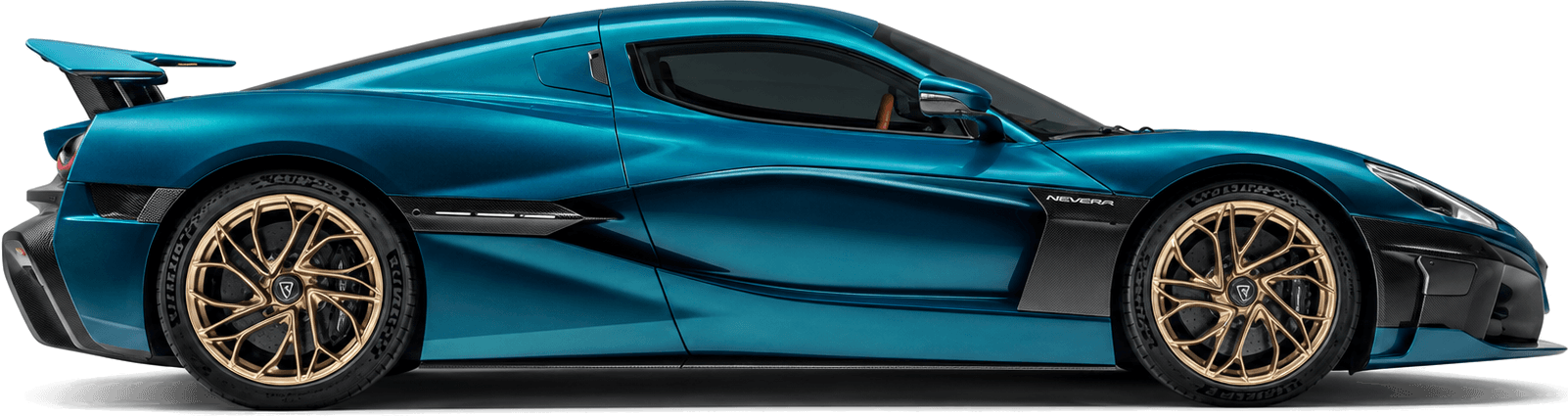
Rimac does not publish model-year labels on the Nevera model page; this seed uses the exact 2025 FuelEconomy.gov record for US EPA range and electricity consumption, paired with Rimac's official Nevera technical specifications. The EPA record lists the make as Bugatti Rimac. Energy consumption is stored from EPA's kWh/100 mile field, not MPGe-as-MPG.
Each figure carries an evidence mark and a text label; expand a value for its full provenance — citation, verification, test conditions, and any alternate figures.
Dewesoft result from Rimac's 2023 record day; acceleration records used one-foot rollout.
The headline numbers for the 2025 Rimac Nevera, answered straight from its sourced record.
Cars in the same class at a comparable price and performance — each figure sourced. Open a head-to-head to weigh the numbers side by side.
Dewesoft result from Rimac's 2023 record day; acceleration records used one-foot rollout.
Originally reported as 4.42 s; stored canonically.
Dewesoft and Racelogic both reported 4.42 s.
Record result with standard one-foot rollout on road-legal Michelin Cup 2 R tires.
Dewesoft quarter-mile result from Rimac's 2023 record day.
Originally reported as 0.3 :1; stored canonically.
Cd in low-drag mode.
Originally reported as 28.96 m; stored canonically.
Dewesoft 100-0 km/h stopping-distance result from Rimac's 2023 record day; Racelogic independently reported 29.12 m. No 70-0 mph or 100-0 mph distance is published in this source.
Originally reported as 1240 mm; stored canonically.
Originally reported as 4745 mm; stored canonically.
Rimac's live model page lists 4,745 mm; the downloadable PDF lists 4,750 mm.
Originally reported as 120 kWh; stored canonically.
Rimac labels this as battery-pack capacity, not usable capacity.
Originally reported as 63.2681 kWh/100mi; stored canonically.
EPA combined electricity consumption for the exact 2025 Bugatti Rimac Nevera record. The source reports kWh per 100 miles; the seed unit converts to the canonical kWh/100 km.
Four independent surface-mounted permanent-magnet electric motors.
All-electric powertrain.
Originally reported as 612.173913 kW/t; stored canonically.
Calculated from Peak power · Curb weight.
Originally reported as 412 km/h; stored canonically.
Rimac factory top speed.
Rimac describes the Nevera as an all-electric two-seat hypercar.
Originally reported as 2400000 $; stored canonically.
Nevera approximate starting price per CarBuzz; ultra-limited hypercar (150 units total, unchanged price across model years). Rimac's base price is quoted at roughly 2 million EUR; figure here is the USD equivalent reported by the publication, not a direct EUR-to-USD conversion performed by this seed.
Michelin Pilot Sport 4S front tire.
Michelin Pilot Sport 4S rear tire.
Originally reported as 2300 kg; stored canonically.
Rimac labels this simply as Weight, with no dry/lightweight qualifier.
Backed by 4 source documents. Expand any value for its full provenance — citation, verification, test conditions, and alternate figures.
Spot a missing or incorrect figure? Add a sourced value — an editor verifies every submission before it appears.
Add dataOriginally reported as 2745 mm; stored canonically.
Originally reported as 2052 mm; stored canonically.
EPA combined range for the exact 2025 Bugatti Rimac Nevera record; city/highway range is 201/208 miles.
Originally reported as 22 kW; stored canonically.
Three-phase on-board charging.
Rimac also lists 350 kW and 250 kW DC Combo charge cases with longer 0-80% times; the seeded value is the peak stated DC rate.
Originally reported as 489 km; stored canonically.
WLTP range based on final testing. Rimac's downloadable PDF rounds this to 490 km; the live model page lists 489 km.
Each electric gearbox is single-speed.
Originally reported as 1408 kW; stored canonically.
Combined output from four independent electric motors.
Originally reported as 2340 N·m; stored canonically.
Rimac lists this as motor torque; wheel torque is separately listed as 13,430 Nm and is not seeded as peak motor torque.
Rimac lists two single-speed front gearboxes and a double single-speed rear gearbox.